
I have to confess that it is a long time since I have been to aquarobics but I have been thinking about it because I have just finished putting my second book onto what passes for paper these days (my first book Desperate Times will be out shortly). In part the second book deals with the horrendous amount of weight I managed to gain and I what did about it. Since the bloke in the gym was not happy with me using the treadmill, I was referred to aquarobics. I swim like a rock does but had enough fat for a decent amount of buoyancy (until I got too dense and began to sink).
There are/were issues though and I outline some here and anyone currently involved might recognise these problems. By the way, it is a fantastic way to get fit if your weight is more than your joints should have to suffer. It isn’t in anyone’s interest for participants to get injured or to be unhappy but sometimes there are more people than what I consider reasonable for the space provided. I’ll give some examples and suggest some solutions. It’s a bit tongue in cheek.
The warm up
Warm up is important, it helps prevent injury and increases heart rate slowly rather than suddenly. Initially the pool feels cold, for this reason some short people squash amongst taller members to be submerged to keep warm.
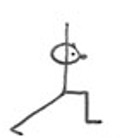
Striding with both legs and arms requires two metres per person front to back. The average participant is 80 cm wide – allowing a 20 cm gap between individuals, gives an average of two square metres per person.
If there are forty participants, you need at least 80 square metres for warm up.
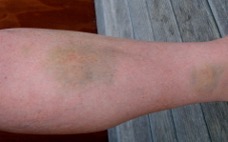
If you are swimming up and down – even if only twenty at a time, you are going to get kicked. Photo is of my bruised leg from said kicking.
Stronger swimmers can swim with arms only but often have a more powerful kick if used. Swimming with arms only means those seeking a serious work out, and those with a competitive edge (there are usually some serious competitors in any class), have little incentive to swim this way, but do so out of courtesy (usually).
Strength Training
Strength training is important for increasing mitochondria. Mitochondria burn the fuel that you take in (food) and produce energy (ATP). We all want more mitochondria (even if we don’t realise it), put simply, muscle burns more fuel than fat. Many people won’t be doing any other kind of strength training outside of aquarobics.
Ladies, (and it is mostly ladies), like flat tummies – and this section of the class is where they are likely to get them.
The strength training requires even more area per person. Not only is there a requirement to be off the bottom of the pool, but also to stretch your body out in four directions. This requires a minimum of four-square metres even if you are short. It is also difficult to stay in one place, so you constantly stray into the territory of others.

It is here that the stronger participants can cause the most damage. Strong stomach muscles and strong thighs can produce an almighty kick. Asking participants to hold back on their effort, rather defeats the object of being there.
To be carried out safely, this part of the class requires an area of 160 square metres in the deep end, or 320 cubic metres of deep water for the class of forty.
Push-ups involve using the edge of the pool takes up the entire length. This doesn’t seem to be a problem, some participants try and avoid push-ups anyway (or bounce off the bottom). Dumbbells could be used for some kind of strength training if the edge is crowded.
Racing in lines, running in circles and cool down
These activities seem to be less hazardous. Some lines might bang into one another but are rarely going at a speed sufficient to cause injury. By cool down time there is often more space (escapees to the spa pool).
As there are no problems only solutions, I have made some proposals. The costs are in NZ dollars because it sucks to live anywhere else.
Solutions
Warmup
The most effective use of space requires well thought out packing. Apple stacking type packing is the most effective, but three-dimensional stacking of participants is likely to add to the hazard rather than mitigate it.
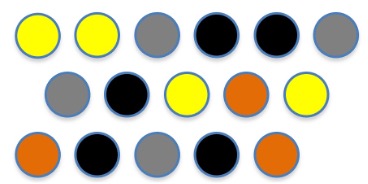
Therefore, a honeycomb type of packing would be desirable, with short and tall people appropriately spaced.
Forty participants would be tedious to draw, but you get the idea. Because the tall and short people need to stay in their allotted area, it would be desirable for them to wear caps that can indicate where in the pool they should be, i.e. T (tall) or S (short).
There would of course be some people who can’t (attention deficit A), or won’t (oppositional defiance disorder, O) stay in the correct position, but these could be similarly identified.
There are usually already too many medium people, so only the very tall or very short should be admitted to the class.
Swimming
Swimmers all need to swim at the same speed and stay in their position; an example could be provided by studying synchronised swimming. This would favour middle speed swimmers but stress the less able and frustrate the more able and so perhaps is best avoided. Swimming in a square around the edge of a pool with no more than two abreast and overtaking only on the inside, would appear to be the safest option.
Strength Training Solutions
This situation is more problematic. It is probably the most important part of the class, both for weight loss programs, for fitness and strength, and not forgetting the flat tummies.
If the tall and short were appropriately placed, and those with attention deficit (on average at least two), and those with oppositional defiance disorder (statistically likely) were dealt with in the caring and professional manner that the instructors always demonstrate, then the space would still be insufficient. Anchor points could prevent drifting.
Splitting the class is not at all ideal, people tend to get bored or cold or aren’t sufficiently coaxed / pushed to get a decent workout. Two instructors could be used, perhaps deep specialists and shallow specialists. Let’s assume that everyone has paid to be in the class, either directly at the door, or indirectly via gym membership. Conceding that the latter could be cheaper options, we could average the class out at a very generous NZ$5 per person. Assuming that the instructors aren’t paid NZ$200 an hour, it seems reasonable that two could be provided.
Or of course, sufficient lanes could be opened.
Safety of other pool users
I don’t know how your pool is laid out, but it is a mystery to me why the disabled access and slow swimmers’ lanes are in the middle of our pool. Turbulence arises either from people larking about in the non-lane area, or from the aquarobics classes. A friend had to be rescued by a pool attendant from the disabled lane after being caught up in the swirl of one of the gentle daytime classes. Similarly, the slow lane is often occupied by weaker swimmers. It seems like a Death Race 2000 situation of putting the weak and disabled in the most dangerous place. Additionally, swimmers in this lane are frequently kicked by aquarobics class members, it just isn’t a safe place to swim.
There are rarely many lane swimmers during the day (swim squad sessions don’t usually overlap with aquarobics classes). Even if there were ten, paying $6 each, it hardly seems equitable that they have more than half the pool! In fact, if every participant were paying the full NZ$8 for aquarobics, you would need 53.3 lane swimmers, or 106.6 disabled swimmers to warrant even half the pool. Even if you take out wages, there is never any reason why the aquarobics classes should have less than half of the pool. It simply doesn’t appear to make business sense, regardless of safety issues.
Give the outside lane to disabled and weak swimmers, then one lane for medium, one lane for fast and open the rest of the pool for the class. It is only an hour after all. Just an observation.
 Lindy Kato (Writer)
Please leave a comment, I totally value feedback!