
I have been cogitating about cyclone Gabrielle that laid waste to much of New Zealand’s North Island last February (2023). Many folk are still in limbo, homes they can neither sell nor live in. I spent two hours on Valentine’s day holding the ladder while my Sweetheart did speed nailing on the roof. People (pets and a horse) were rescued off roofs, and it still makes my eyes leak to watch Kylie McIntyre calling her cows in a video that went viral. https://www.youtube.com/watch?v=vdSF-UNJANg
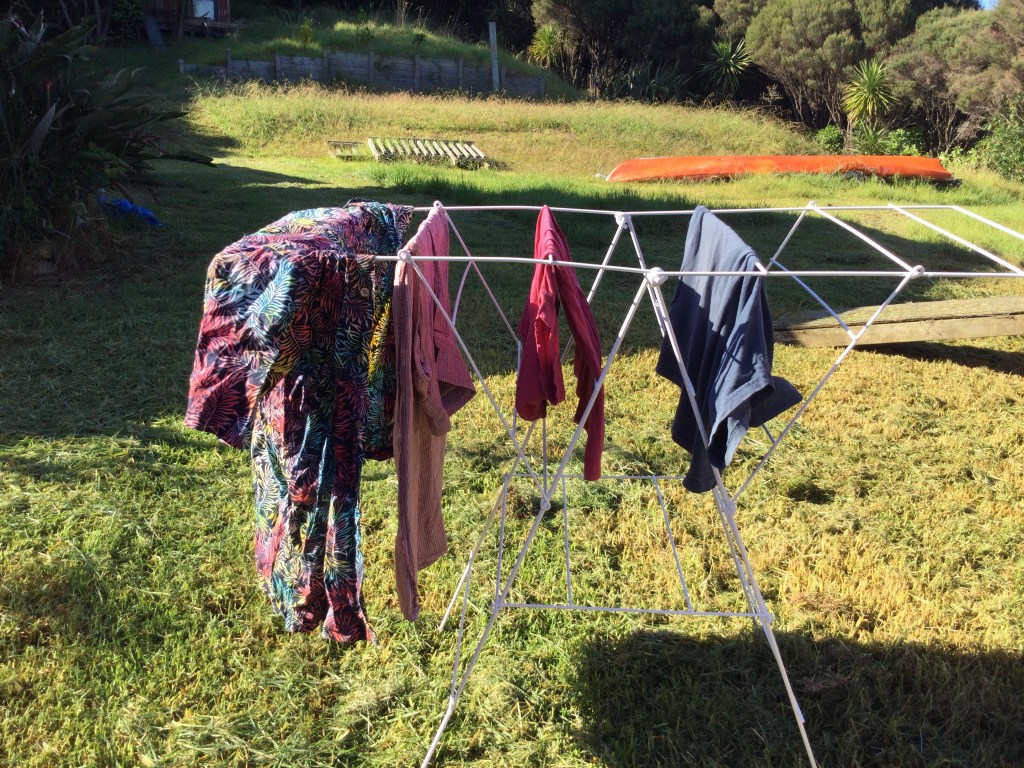
I try and do my bit, I had reusable shopping bags before there was no longer a choice, and my washing is sun-dried.
Why is it that global procrastination is allowing our planet to boil while we are asleep?
Time spent procrastinating has been on the rise for years but is a modern luxury. Why do the thing that you don’t really want to do today, when you could put it off until tomorrow? If you are starving or in danger, (which most of us are not), your motivation is ramped up, procrastination could kill. So what controls it?
Your brain stem is the oldest part of your brain in evolutionary terms and controls the basics, for instance breathing. Next ancient is the limbic system, like the brain stem, it is automatic and it decides what you should pay attention to, specifically the two almond shaped areas called the amygdala. The amygdala determine how to act in a crisis. If we have to decide ‘snake or stick’, those that decide stick once too often get taken out of the gene pool.
This is the basis of the Darwin awards, if you take yourself out of the pool by your own stupidity before breeding, then you get a ‘full Darwin’ and the pool is just that tiny bit healthier. There have been two Kiwi’s that have won posthumous Darwin awards, one stood his car jack on his car battery to give more height under the car…can you see how this ended badly? The next put a weight on a lever in order to override the machinery protection system in a food processing plant. He was pulled into the machine and marmalised (Northcutt and Kelly 2006). Not everyone’s limbic system is up to the task.
Has procrastination increased because our lives have become too safe? In fact increased procrastination is linked to an increase in stress and a decline in coping mechanisms. Modern day stress no longer arises from physical danger for most of us, but in the last 70 years our world has become unrecognisable.
In the 1950s we were recovering from two world wars and the 1918 flu pandemic, the death toll was staggering. Our limbic system would have been in full swing in the trenches and in the bomb shelters. Now our stress comes from whether or not anyone has reacted to our latest post.
Physically things have been working against us as well. In the 1960s everyone was stick thin. Diets have changed and the ultra processed food that we eat has set our immune systems on fire, allergies, autoimmune diseases, and diffuse alarm is the new normal (Ravella 2023).
Children are different too, in the 1950s and 60s we played in parks, or on bomb sites until the street lights came on. Injuries were few, we knew our limits, older children took responsibility for the youngsters but many of us also had huge responsibilities. As a six year old, living in a condemned house and with mum and dad at work all day, including weekends, dad tried to tell us that mixing concrete was a leisure activity. There were ten layers of wallpaper and lincruster, my brother (aged four) was in charge of the wet sponge and I had the scraper.
When you look at the six year olds of today, how competent are they?
Are our poor coping mechanisms to do with helicopter parenting? Peter Gray thinks so, in his summary regarding the causes of anxiety and depression in children he points the finger at the lack of unsupervised play, resulting in children that are ill equipped to take the initiative and asses risk. He also cites that the right to quit and the consequent feelings that arise from quitting is frequently taken off them. The decline in childhood mental health predates the internet, so although the distraction isn’t helping, it didn’t cause it (Gray et al 2023).
It is well documented that anxiety slows decision making (Hartley and Phelps 2012). Anxious children have been found to have changes in the amygdala, remember the limbic system described above? In a study of 233 children diagnosed with with either autism spectrum disorder (ASD), attention deficit hyperactivity disorder (ADHD), or obsessive compulsive disorder (OCD), the anxiety levels of those with ASD and OCD could be predicted by those changes (Seguin et. al. 2022).
Our prefrontal cortex is supposed to be in charge, it matures late and unfortunately it has to be kick started in order to decide that we need to do something. It is simpler to let our limbic system run things because it will automatically have us do safe things and things that make us happy. This may be OK on a personal level but globally the inertia might well spell our demise.
Forty years ago I was telling people that we would be taken out either by a virus or our own destruction of the planet. I wasn’t thinking that it would happen during my life time but the events of the last few years have certainly stirred up my old brain systems!
References
Arrhenius, S. (1896). On the influence of carbonic acid in the air upon the temperature of the ground. Philosophical Magazine and Journal of Science, Series 5, Vol. 41, No. 251, April, 237-276.
Gray, P., Lancy, D.F. Bjorklund (2023). Decline in Independent Activity as a Cause of Decline in Children’s Mental Well-being: Summary of the Evidence. The Journal of Pediatrics, Volume 260, 113352
Hartley CA, Phelps EA.(2012) Anxiety and decision-making. Biol Psychiatry. 15;72(2):113-8. doi: 10.1016/j.biopsych.2011.12.027. Epub 2012 Feb 10. PMID: 22325982; PMCID: PMC3864559.
Northcutt, W. And Kelly, M.C. (2006) The Darwin Awards 4: Intelligent Design. Penguin Group Ebook. New York ISBN: 9781742280875
Ravella, S. (2023) A Silent Fire: The Story of Inflammation, Diet and Disease. Bodley Head. ISBN: 9781847926647
Seguin D, Pac S, Wang J, Nicolson R, Martinez-Trujillo J, Anagnostou E, Lerch JP, Hammill C, Schachar R, Crosbie J, Kelley E, Ayub M, Brian J, Liu X, Arnold PD, Georgiades S, Duerden EG. (2022). Amygdala subnuclei volumes and anxiety behaviors in children and adolescents with autism spectrum disorder, attention deficit hyperactivity disorder, and obsessive- compulsive disorder. Hum Brain Mapp. 2022 Nov;43(16):4805-4816. doi: 10.1002/ hbm.26005. Epub 2022 Jul 12. PMID: 35819018; PMCID: PMC9582362.


 Lindy Kato (Writer)
Leave a reply to Lindy Kato Cancel reply