
New Zealand is paradise, but things have happened and still happen that anger and disappoint. We should know better, we should do better.
Every country has history they can’t now fix. Canada has missing native children; Ireland and their babies stuffed in a septic tank thanks to the Magdalene Laundries. Australia’s stolen generation, and a similar thing happened in New Zealand too where colonisers believed it would be better for children to be removed from their families to assimilate into the conquering culture. Even stuff that isn’t history like the injured and dead mothers and babies in the care of the Nottingham University Hospitals Trust that hit the headlines just a few days ago. The enquiry found a bullying and toxic culture.
Here in New Zealand a Royal Commission of Inquiry into the abuse and neglect of children, young people and adults in the care of the State and faith-based institutions has apologised to thousands of people harmed as children where they should have been protected.
What has wound me up now, is twofold. Firstly, it is estimated a further 80 children a year are still likely to be abused in care, 80 too many. The specific incident though, that has led to my blog, is the 11-year-old autistic girl mistaken for an adult, restrained and injected with psychotropic drugs. This was in March last year and sounded incredible at the time. Investigations into the event (Health and Disability Commissioner and the Director of Mental Health’s Section 95 inquiry, plus a police investigation) has found it was a clusterfuck.
Briefly – a non-verbal autistic 11 year old wanders away from home early in the morning. She’s Māori (whether that has anything to do with it I don’t know). The child is known to wander and usually her family find her, but this time they did not. They didn’t report her missing until later in the day.
The police had already picked her up in response to a call from a member of the public, concerned for her welfare. The caller describes a woman in her early twenties climbing the railings on a bridge. So far this is all fair enough.
The police describe her as a teenager and two of them suspect she’s autistic. They drive her to the hospital emergency department, she became distressed, tried to get out of the car and was handcuffed. The cops distribute a photograph to see if anyone can identify her. The crisis team notice she’s a child, and autistic, and should not be taken to the mental health unit. She’s left in the emergency department.
In response to the circulating photo, it’s suggested that she could be a twenty-year-old from a community care home who hasn’t returned from leave. A photo of this woman is sent to the police, all three police persons think this is not the same person. Everyone is acting in good faith, concerned for a girl on a bridge, correctly identified as autistic and non-verbal. Then it seems to have gone downhill.
Back at the cop shop – the organisation responsible for the twenty-year-old are contacted by police. They speak to someone who hasn’t seen the older woman in a while, they think it could be their missing person, but they aren’t sure.
The police contact the emergency department, saying it was the missing person. The crisis team is called and assume the identity has been confirmed. The eleven-year-old is sectioned, taken to the mental health unit, and when she refused the prescribed treatment (for the twenty-year-old), she’s restrained, injected, and moved to a bedroom, where she sleeps into the evening. When she wakes up, she is restrained and injected again.
Clearly, it’s wrong that any child is held down and injected with adult drugs prescribed for someone else, but it would have been wrong even if it were the twenty-year-old subjected to the treatment.
The twenty-year-old had a compulsory treatment order – so staff would assume they were giving her treatment she couldn’t refuse. I was an advanced practitioner for 20 years – a qualified Registered Psychiatric Nurse (RPN) and I like to think I would have refused to take part in holding down and injecting someone I didn’t know, and who doesn’t present a clear and present danger. They should have checked the order was valid and it wasn’t. It was more than a month old and needed another supporting person to determine it was still in the patient’s interest.
Could the eleven-year-old be described as a danger to themselves or others which could be a mitigating factor? She was facing a corner, distressed and crying (I would be too). I teach would be nurses, I tell them how hard it is to decline to do as you are ordered, especially if you’re young. I watch a lot of ‘planes dropping out of the sky’ shows on TV, and how often the copilot finds it too hard to stand up to the captain … even when they are all going to die.
I have not been able to find the exact medication given; it’s merely described as anti-psychotic medication. Another snippet from the investigation says the medication used is “rarely administered to children” and not the first line choice for adults – but given due to a shortage of supply. It sounds as if this wasn’t the medication prescribed, even for the twenty-year-old, and makes it sound more of an emergency than it was.
I know a bit about this from a first-hand perspective. This is an excerpt from my recent book Bleak Expectations. To give a bit of background, I had recently dislocated my shoulder on an ice rink and won first prize for a poster presentation at an international molecular biology conference (I mention this to demonstrate that I’m not an idiot). Maybe I am an idiot because I thought skiing with shoulder pain was an idea. Ski patrol found me huddled by the orange ski netting.
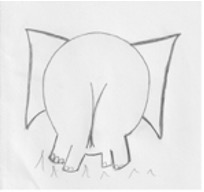
Holding the end of his poles, he slowly drags me to the medical centre. Where I still can’t explain myself. They decide I need a responsible adult. The only person I feel close enough to for him to come to the rescue is the PhD who burst through the dorm window in Christchurch, too drunk to know which way was up. He can hardly take the moral high ground now. He will be on the black run and really pissed off at missing out on a moment of ski time. The medical centre people say they are on the verge of closing the black run because of the wind. It might not be true, but it makes me feel better. They’ll put a chalk board with his name at the end of the run. I’m to wait. I’m not good at waiting. Eventually I draw elephant bums on the wall. The only thing I can draw.
They give me an injection; I think it is a painkiller. Plus, a piece of paper I can’t read. I’m a qualified nurse, an advanced practitioner, I should know better than to accept an injection I only assume is a painkiller.
The injection was Acuphase, an antipsychotic and it rendered me incapable of stringing anything together. Although I wasn’t restrained and injected, it would have been against my will had I known what it was. The effects lasted a couple of days.
I don’t know how it feels to be autistic, although neurodivergent people have told me that some of the things described in the book are perfectly understandable from their perspective. I’m not going to give details, no one wants that sort of thing in their head – unless of course you do want that sort of thing in your head then you can read it in Bleak Expectations, available from The Underground Bookstore in NZ or Amazon etc.
Government of Canada Missing Children and Burial Information https://www.rcaanc-cirnac.gc.ca/eng/1524504992259/1557512149981
Page, C. (13th July 2025) How hundreds of Irish babies came to be buried in a secret mass graveBBC News. https://www.bbc.com/news/articles/cpwqnwrkd1go
AITSIS (nd) The Stolen Generations. https://aiatsis.gov.au/explore/stolen-generations
Hammond, L. & Torr, G. (2026) Babies and mothers died after ‘systemic’ failings. BBC News. https://www.bbc.com/news/articles/c1kyw24elv7o
Abuse in Care Royal Commission of Inquiry https://www.abuseincare.org.nz/
The Health and Disability Commissioner (2026) Decision finds disabled child’s rights severely compromised https://www.hdc.org.nz/news-resources/news/decision-finds-disabled-child-s-rights-severely-compromised/
Midday Report, 12:10 pm on 19 June 2026 radio interview for police response https://www.rnz.co.nz/national/programmes/middayreport/audio/2019039974/police-respond-to-report-into-treatment-of-11yo-autistic-girl


Please leave a comment, I totally value feedback!